B2B Lead Nurturing: How Owner-Led Firms Turn Slow Leads Into Booked Calls
Most owner-led firms lose more deals to silence than to a competitor. Here is a simple B2B lead nurturing system that keeps good-fit buyers warm until they are ready to act.
 By Kevin Durkin, Co-Founder, Strategy & AI Quant-Tek.AI
 Most owner-led firms lose more deals to silence than to a competitor. A prospect takes a call, says the timing is not quite right, and then nothing happens. Either nobody follows up, or the follow-up is a single generic email that gets ignored. That gap is where revenue quietly leaks, and closing it is the whole point of B2B lead nurturing. Done well, nurturing is not a drip of reminders. It is a deliberate system that keeps good-fit buyers warm until they are ready to act, so a slow yes still becomes a booked call instead of a dead end.
What B2B lead nurturing actually is
B2B lead nurturing is the work of staying useful to a qualified buyer across the weeks or months between first interest and a real decision. Most B2B purchases do not happen on the first contact. The buyer has other priorities, a budget cycle, and people to convince internally. Nurturing meets them in that gap with relevant, low-pressure touches that build trust and stay top of mind, so when the trigger to act finally arrives, you are the obvious call. It is the difference between hoping a prospect remembers you and making sure they do.
Why owner-led firms drop the follow-up
If follow-up were just a matter of discipline, every experienced owner would already nail it. The reasons it slips are structural, not motivational:
- The team is busy. Active deals always feel more urgent than a lead who said 'check back later,' so the slow ones quietly fall off the list.
- There is no system to hold the lead. Without a place to park a not-yet-ready buyer and a reminder to return, the follow-up depends entirely on someone remembering.
- Every lead gets the same generic sequence, so a high-fit buyer worth six figures receives the same three emails as a tire-kicker, and tunes them out.
- Nobody owns it. Sales chases the deals that are close, marketing runs campaigns, and the in-between lead belongs to no one.
A simple B2B lead nurturing system you can run
You do not need new software or a marketing hire to start nurturing well. You need a short, repeatable sequence that anyone on your team can run the same way every time. Here is a practical version any owner-led firm can put in place this quarter.
- 1
Separate not-yet-ready leads from dead ones
A good-fit buyer who is not ready belongs in a nurture track. A poor-fit lead belongs in a polite no. Mixing the two means you either pester people who will never buy or neglect people who eventually will. Sort them on the first real conversation.
- 2
Capture the reason they are not ready
Write down what is blocking the deal: budget timing, an internal champion who needs buy-in, a contract that renews in the fall. The block tells you exactly when to return and what to say when you do, which turns a vague 'follow up sometime' into a dated, specific touch.
- 3
Schedule the next touch before you hang up
Put the follow-up on the calendar while the conversation is fresh, tied to the block you just captured. A nurture that lives in someone's memory does not happen. A nurture with a date and an owner does.
- 4
Make each touch useful, not just a check-in
Send something that earns the open: a relevant case, an answer to a question they raised, a short note tied to a change in their world. 'Just circling back' adds nothing. A touch that helps them move their own problem forward keeps you welcome in the inbox.
- 5
Hand off cleanly the moment they signal readiness
When a nurtured lead replies, asks a buying question, or hits the trigger you flagged, move fast and route them straight to a real conversation. The whole point of nurturing is to be first and ready when the timing finally turns.
How nurturing fits the larger pipeline
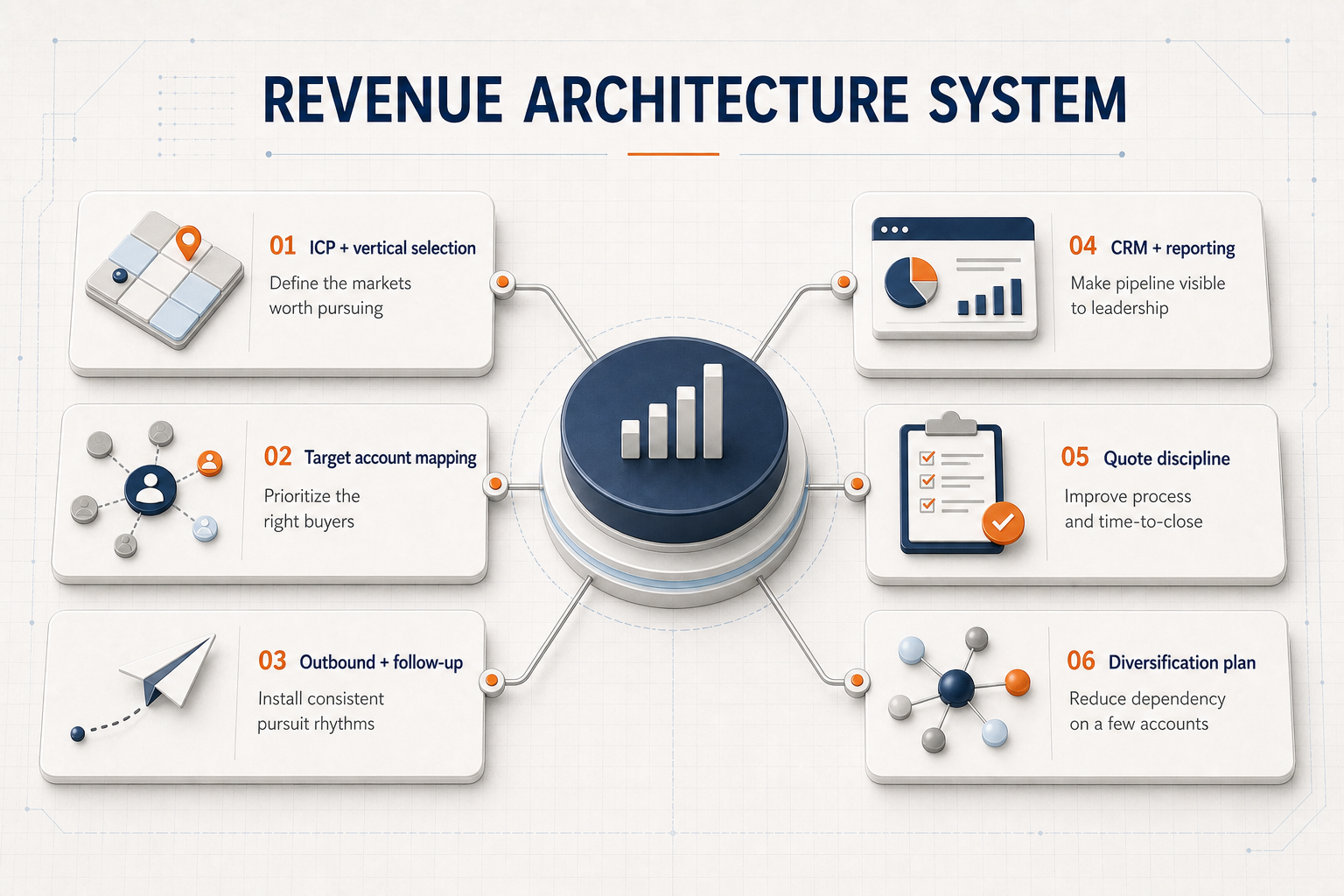
Nurturing only works when the leads you are holding are worth holding. If your pipeline is mostly poor-fit inquiries, no amount of follow-up will save it, which is why nurturing sits downstream of attraction and qualification rather than standing on its own. It is the third leg of a predictable sales pipeline: attract the right buyers, qualify them honestly, then nurture the good-fit ones who are not ready yet. The same structure drives our lead generation system for service firms, and all three are field versions of the Revenue Architecture System we install for clients.
Where to start
You can begin this week without any new tools. Pull every lead from the last quarter that went quiet after a real conversation, and ask one question of each: was this a genuine fit who simply was not ready? Those are your nurture list, and most owner-led firms find more revenue sitting in that list than they expected. Park them somewhere visible, capture why each one stalled, and schedule one useful touch. That single habit is the start of a real B2B lead nurturing system, and you can read more about how we work before you ever talk to us.