How Owner-Led Manufacturers Build a Predictable Sales Pipeline Without Relying on Referrals
Referrals feel great until they dry up. Here is how owner-led manufacturers build a predictable sales pipeline they can forecast, not just hope for.
 By Kevin Durkin, Co-Founder, Strategy & AI Quant-Tek.AI
 Ask most owner-led manufacturers where their last ten customers came from and the answer is almost always the same: a referral, a past relationship, or a chance introduction. That is a sign of a good reputation. It is not a predictable sales pipeline. When growth depends on who happens to call this quarter, revenue swings, planning gets harder, and the business stays one slow month away from anxiety. The good news is that this kind of reliability is something you build on purpose, not something you wait for.
The hidden cost of a referral-only pipeline
Referrals are valuable, but they are not a system. They arrive on their own schedule, not yours. You cannot forecast them, you cannot scale them on demand, and you cannot tell a referral source exactly which kind of buyer you want next. For a manufacturer trying to add a line, hire ahead of demand, or smooth out a seasonal cycle, that unpredictability is expensive. Every quarter spent reacting to whatever walked in the door is a quarter you are not steering the business toward the work you actually want.
What a predictable sales pipeline actually looks like
This is not about volume for its own sake. It is about knowing, with reasonable confidence, that qualified conversations will keep arriving whether or not a referral lands. A few traits separate a real pipeline from a lucky streak:
- You can name where new opportunities come from, and reproduce it next month.
- Best-fit buyers find you while they are still researching, not only after they already have a problem.
- Activity turns into qualified conversations at a rate you can roughly predict.
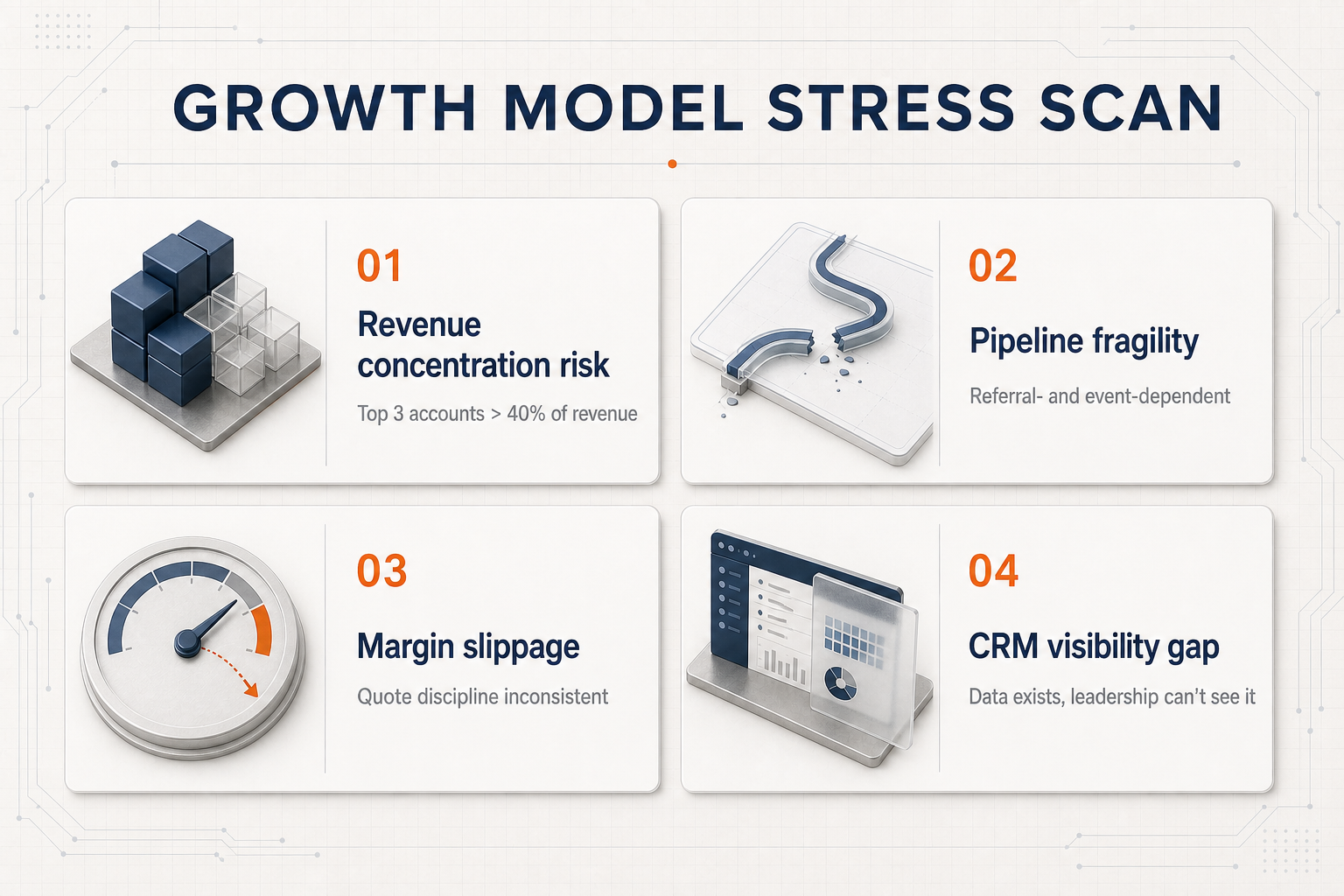
- Revenue is spread across several sources, so one quiet referral month does not threaten payroll.
Why manufacturers struggle to build one
If building one were simply a matter of effort, every operationally strong manufacturer would already have it. The reasons it stays out of reach are usually structural, not motivational:
- Buyers research quietly. By the time a serious buyer calls, they have already built a shortlist from sources you never saw.
- Marketing gets treated as occasional output, a trade show here or a brochure there, rather than an always-on engine.
- The owner is the rainmaker. Pipeline lives in one person's relationships and travels out the door with them.
- Success is measured by activity, not outcomes, so nobody notices the leak until a slow quarter exposes it.
Five steps to build a predictable sales pipeline
You do not need a large marketing department to start. You need a clear order of operations. Here is a practical sequence any owner-led manufacturer can begin this quarter.
- 1
Define your best-fit buyer
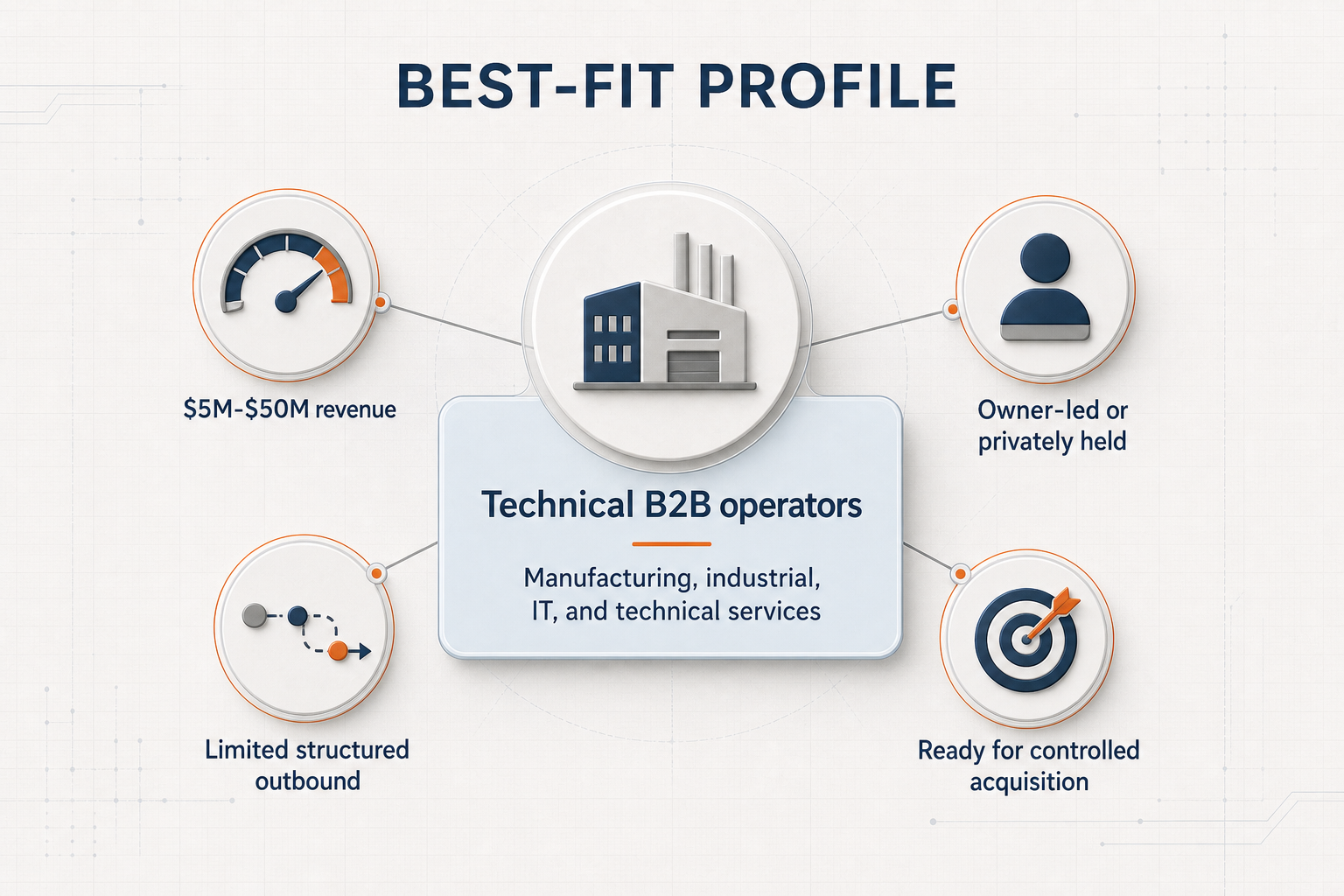
Write down the exact profile of the accounts you most want: industry, size, the trigger that makes them need you, and the work you do best. A pipeline pointed at everyone converts no one.
- 2
Map how buyers find you today
List every source your last twenty deals came from. The thin spots, the places competitors appear and you do not, are exactly where your future pipeline has room to grow.
- 3
Build visibility where buyers already research
Show up consistently in the channels your best-fit buyers use to evaluate vendors, so you make the shortlist before anyone picks up the phone.
- 4
Turn interest into structured conversations
Give an interested buyer a clear, low-friction next step instead of leaving them to figure it out. A simple, repeatable path beats a clever campaign that runs once.
- 5
Measure outcomes, then compound
Track qualified conversations, conversion, and time to close, not just clicks and impressions. Double down on what produces revenue and let the rest go.
How this connects to the Revenue Architecture System
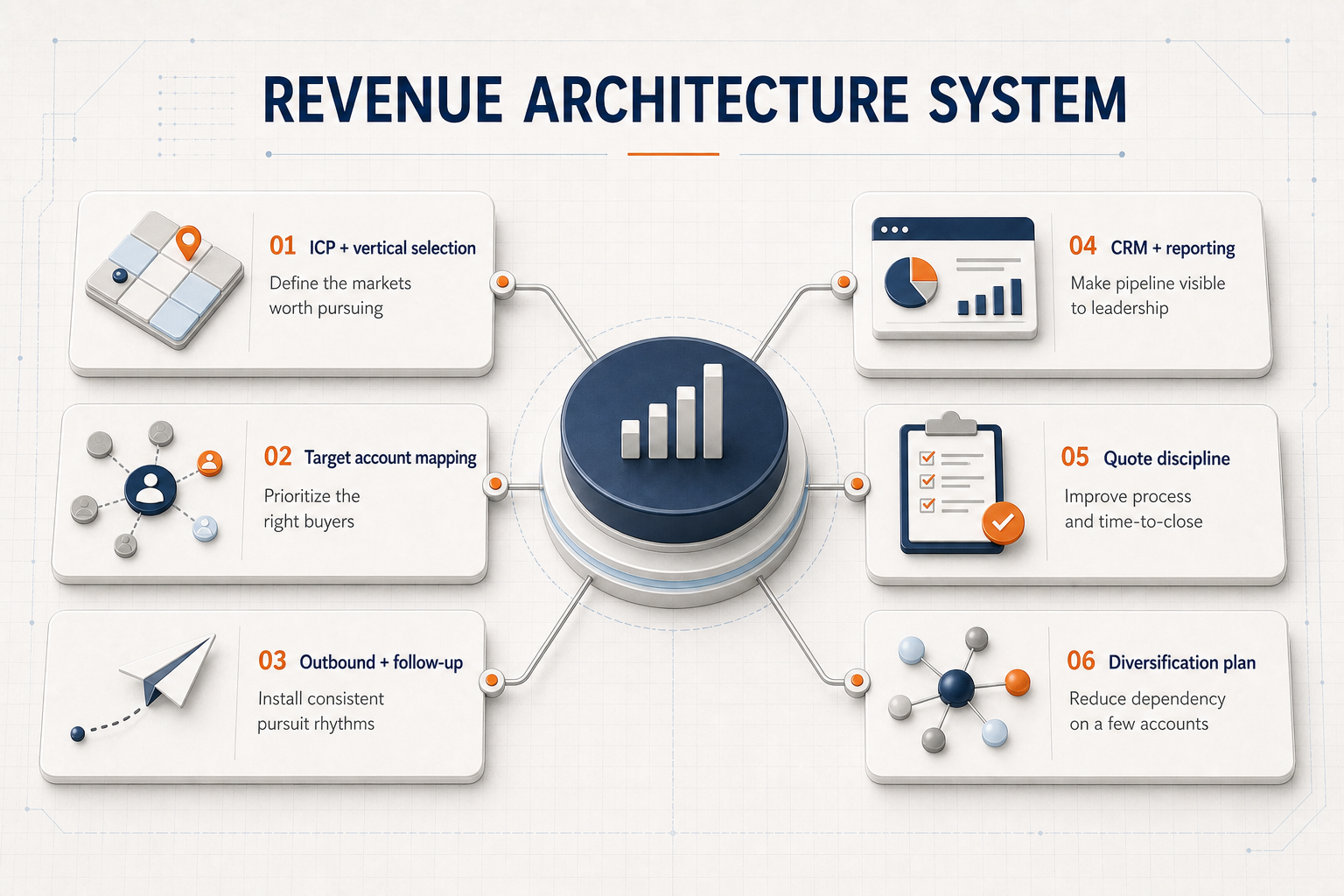
These five steps are the field version of the system we install for clients. We call the full engagement the Revenue Architecture System, and it follows the same logic in a fixed order: diagnose where revenue is leaking, design the engine, install it inside your business, and let it compound. The difference between a checklist and a system is that a system is built to keep running after the launch energy fades. You can see how we install it end to end.
Where to start
A predictable sales pipeline does not start with a bigger budget. It starts with naming, honestly, where this quarter revenue is really coming from. If most of it traces back to luck, that is your opening. The fastest first move is a short, no-pitch audit of your current pipeline. You can also read more about how we work before you ever talk to us.