Lead Generation for IT Services Companies: A Practical System for Owner-Led MSPs
Most managed services firms grow on referrals and renewals until growth stalls. Here is a practical system for lead generation that owner-led MSPs can run on purpose, not by luck.
 By Kevin Durkin, Co-Founder, Strategy & AI Quant-Tek.AI
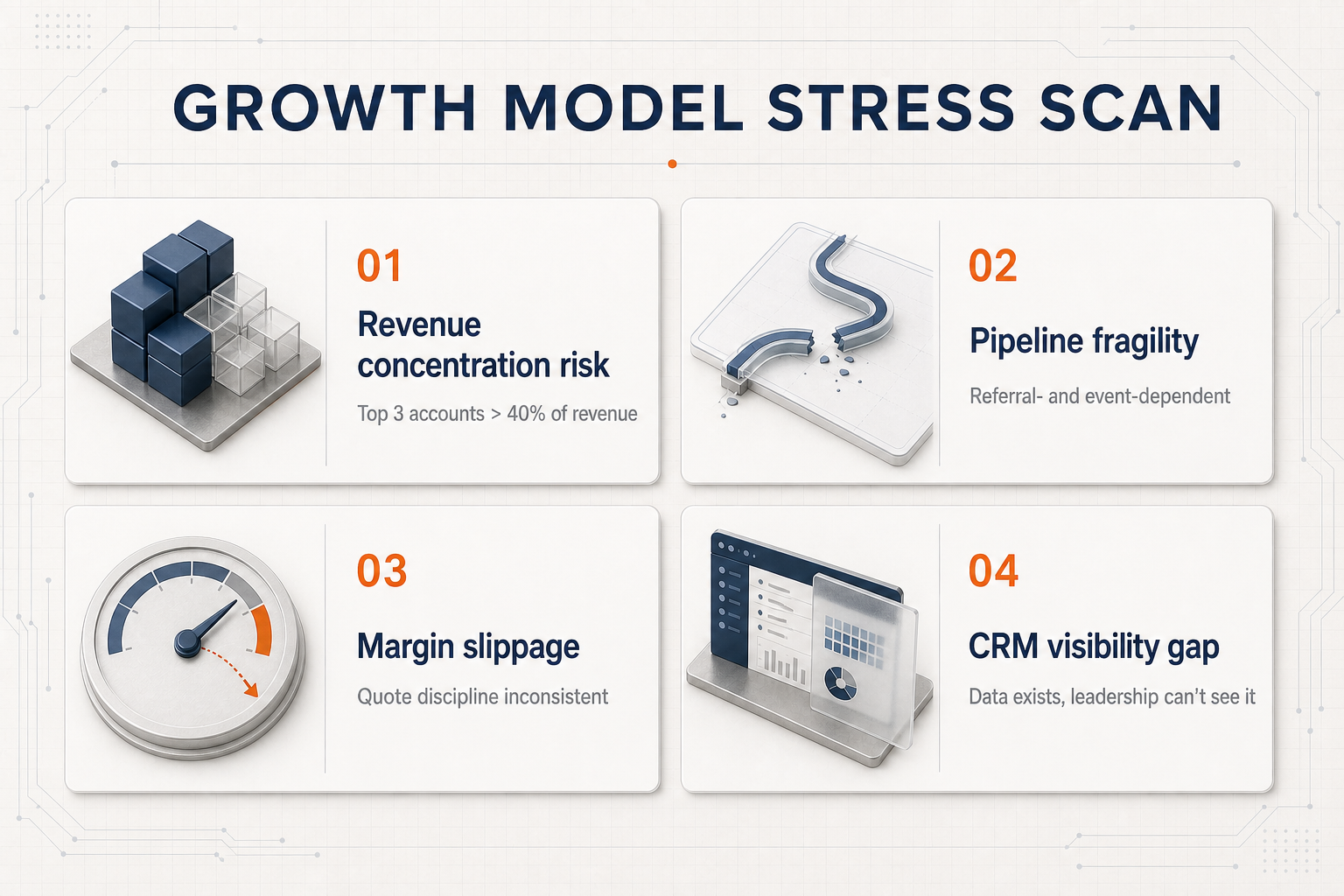
 For most owner-led IT and managed services firms, growth comes from three places: referrals, renewals, and the founder's own network. That mix is a credit to your reputation, and it works well for years. Then it stalls. A big account churns, a referral source retires, or you decide to hire a technician ahead of demand and realize there is nothing predictable filling the top of the funnel. That is the moment most MSP owners start taking lead generation for IT services companies seriously, and it is also the moment they discover how different it is from selling to people who already trust them.
Why lead generation is harder for IT and managed services firms
Selling managed services is not like selling a product with an obvious price tag. Buyers are handing you the keys to their systems, their data, and their uptime, so the sale is built almost entirely on trust. Three things make consistent demand generation genuinely hard in this market:
- Buyers research quietly. By the time a prospect fills out a form, they have already shortlisted two or three providers from sources you never saw.
- The category looks commoditized from the outside. Most MSP websites say the same things, so a serious buyer cannot tell you apart until they talk to you.
- The owner is the rainmaker. Pipeline lives inside one person's relationships, which means it cannot scale and it walks out the door if that person steps back.
What good lead generation for IT services companies looks like
A working system is not about chasing more clicks or running one clever campaign. It is about knowing, with reasonable confidence, that qualified conversations will keep arriving whether or not a referral lands this month. A few traits separate a real engine from a lucky streak:
- You can name where new opportunities come from and reproduce it next quarter.
- Best-fit buyers find you while they are still researching, not only after a competitor fails them.
- Interest turns into booked, qualified conversations at a rate you can roughly predict.
- New revenue is spread across several sources, so one quiet referral month does not threaten the team.
A practical system any owner-led MSP can start this quarter
You do not need a marketing department to begin. You need a clear order of operations. Here is a sequence that turns lead generation for IT services companies from a hope into a process you can run on purpose.
- 1
Define your best-fit client
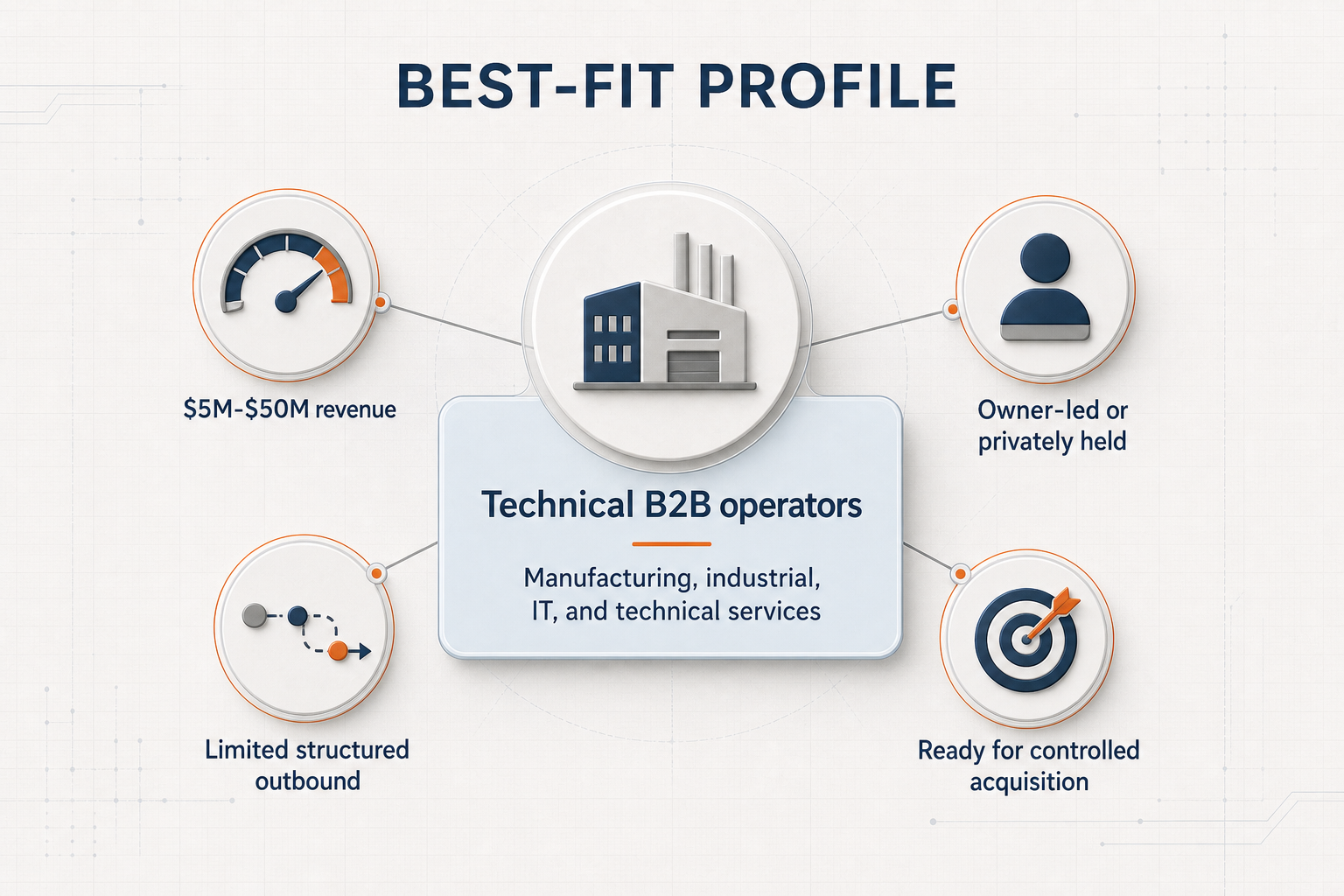
Write down the exact profile you want more of: industry, company size, the compliance or uptime trigger that makes them need a real MSP, and the work where you clearly win. A pipeline pointed at everyone converts no one.
- 2
Map how buyers find you today
List the real source of your last twenty clients. The thin spots, where competitors show up and you do not, are exactly where your future lead generation has the most room to grow.
- 3
Build visibility where buyers already research
Show up consistently in the channels your best-fit buyers use to vet providers, so you make the shortlist before anyone fills out a form or asks a peer for a recommendation.
- 4
Give interest a clear next step
Replace a generic contact form with one low-friction, specific offer such as a security or backup readiness review. A simple repeatable path beats a clever campaign that runs once.
- 5
Measure outcomes, then compound
Track qualified conversations, win rate, and time to close, not clicks and impressions. Double down on the sources that produce signed agreements and let the rest go.
How this connects to the Revenue Architecture System
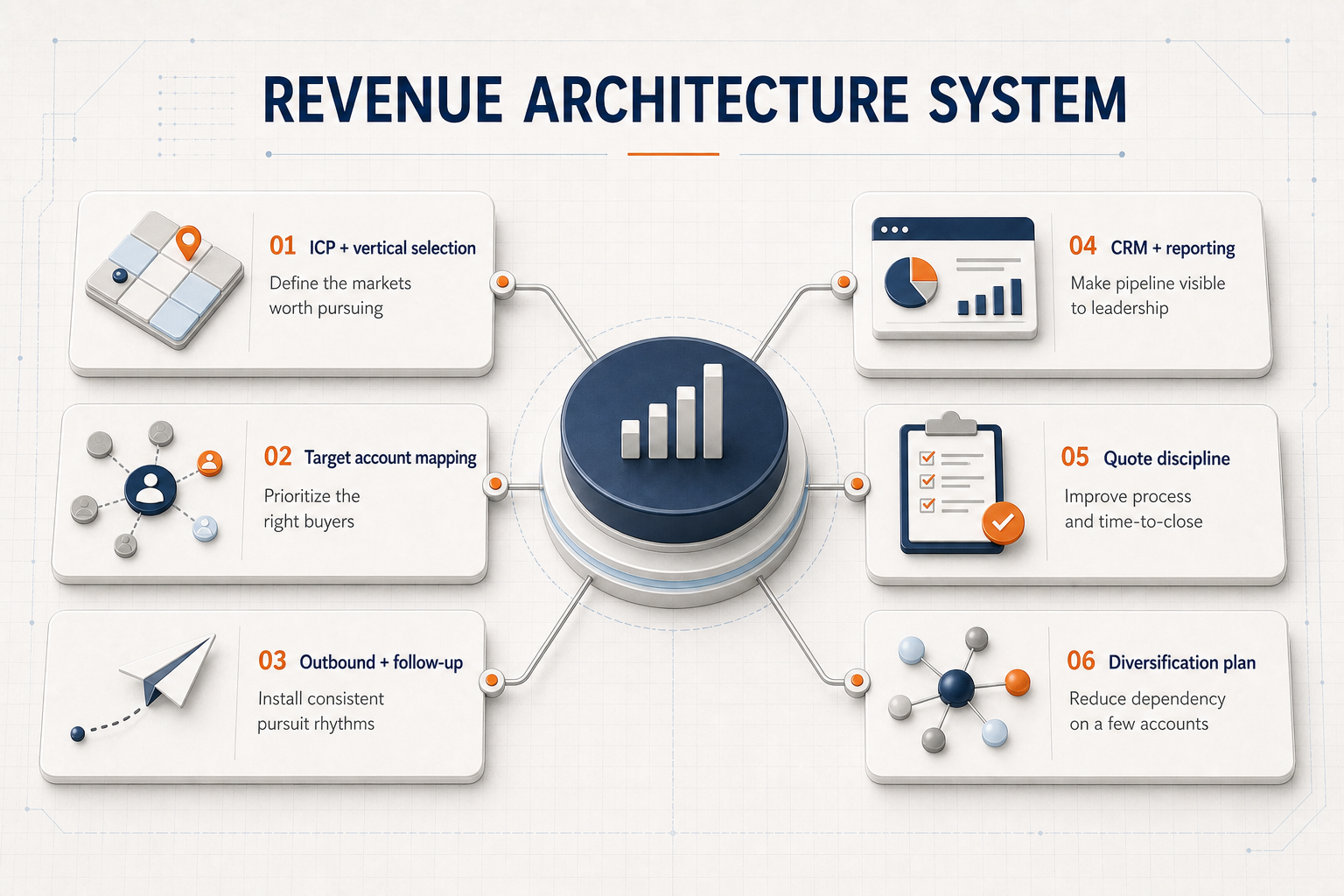
These steps are the field version of the system we install for clients. We call the full engagement the Revenue Architecture System, and it follows the same logic in a fixed order: diagnose where revenue is leaking, design the engine, install it inside your business, and let it compound. The principle is identical to the one behind a predictable sales pipeline for manufacturers. The difference between a checklist and a system is that a system keeps running after the launch energy fades. You can see how we install it end to end.
Where to start
Better lead generation for IT services companies does not start with a bigger ad budget. It starts with naming, honestly, where this quarter's new clients are really coming from. If most of it traces back to referrals and renewals, that is not a failure, it is your opening. The fastest first move is a short, no-pitch audit of where your pipeline leaks before a prospect ever reaches you.