How to Qualify B2B Leads: A Simple Framework for Owner-Led Firms
A full inbox is not the same as a full pipeline. Here is a simple framework owner-led firms use to qualify B2B leads, so the team spends its time on the deals most likely to close.
 By Kevin Durkin, Co-Founder, Strategy & AI Quant-Tek.AI
 Most owner-led firms do not have a lead problem. They have a sorting problem. The inbox is full, the calendar has demos on it, and the team feels busy, yet the close rate is thin and good weeks are followed by quiet ones. The issue is usually that every inquiry gets treated the same, so the best opportunities wait behind the ones that were never going to buy. Learning how to qualify B2B leads is what turns a busy pipeline into a productive one, and it is a skill you can build with a simple framework rather than a bigger team.
What it actually means to qualify a B2B lead
To qualify a lead is to decide, early and on purpose, whether a prospect is worth your team's limited time. It is not about being picky for its own sake. It is about matching effort to the opportunities most likely to become customers and stay customers. A qualified lead fits the kind of work you do best, has a real reason to act now, and can actually make the decision. Everything else is either a nurture for later or a polite no, and naming that difference early is where most of the leverage lives.
Why owner-led firms get this wrong
If qualification were just a matter of discipline, every experienced owner would already do it well. The reasons it slips are structural, not motivational:
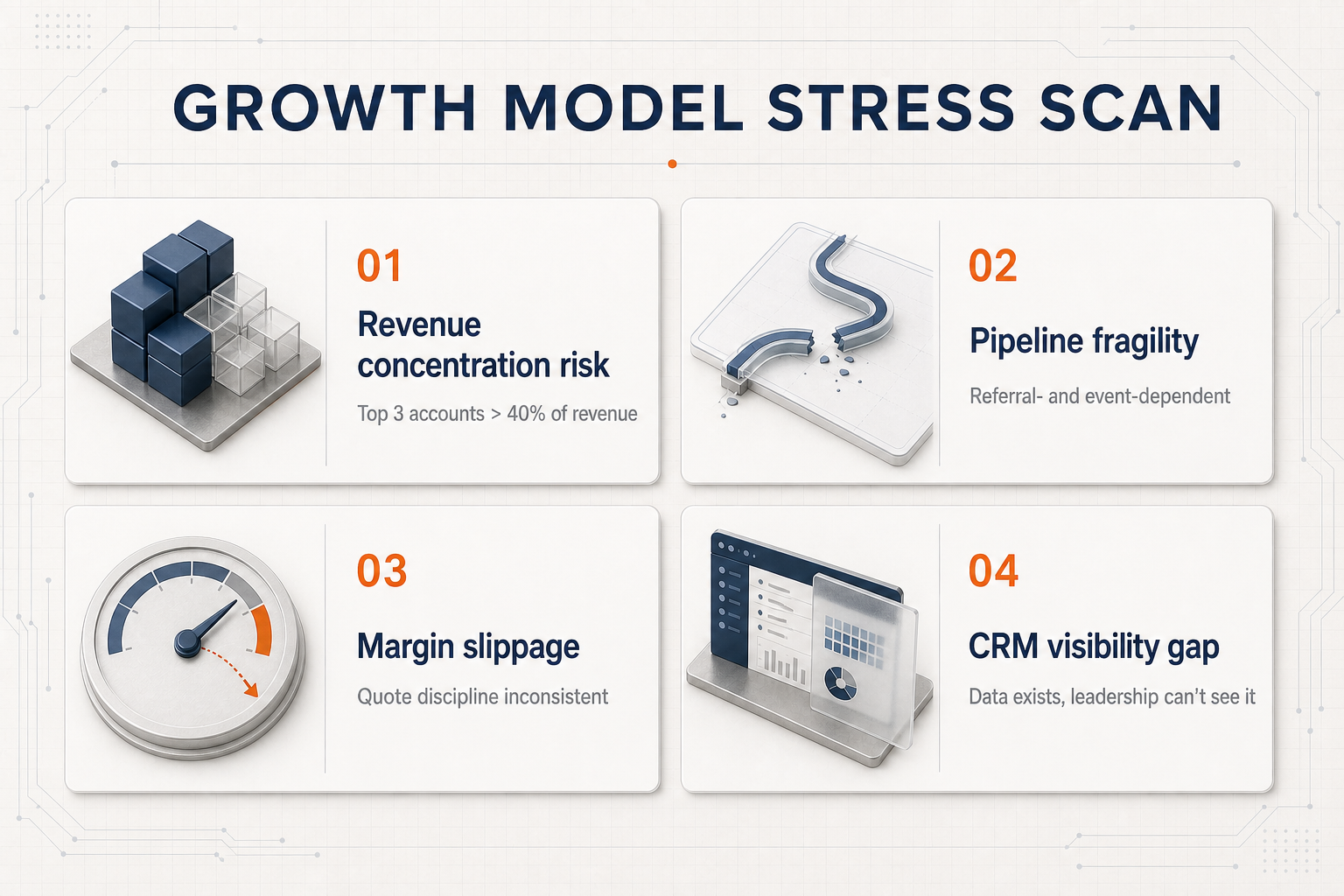
- Scarcity thinking. When pipeline feels unpredictable, every lead feels precious, so nobody wants to say no to one.
- No shared definition of a good fit. The owner knows it by instinct, but the team has nothing written down to apply consistently.
- Activity gets mistaken for progress. A calendar full of demos feels like momentum, even when most of those demos were never going to close.
- The follow-up is one size fits all, so a high-fit buyer with budget gets the same generic sequence as a tire-kicker.
A simple framework to qualify B2B leads
You do not need a complicated scoring model to start. You need a short, repeatable order of operations that anyone on your team can apply the same way every time. Here is a practical sequence any owner-led firm can put in place this quarter.
- 1
Define your best-fit buyer in writing
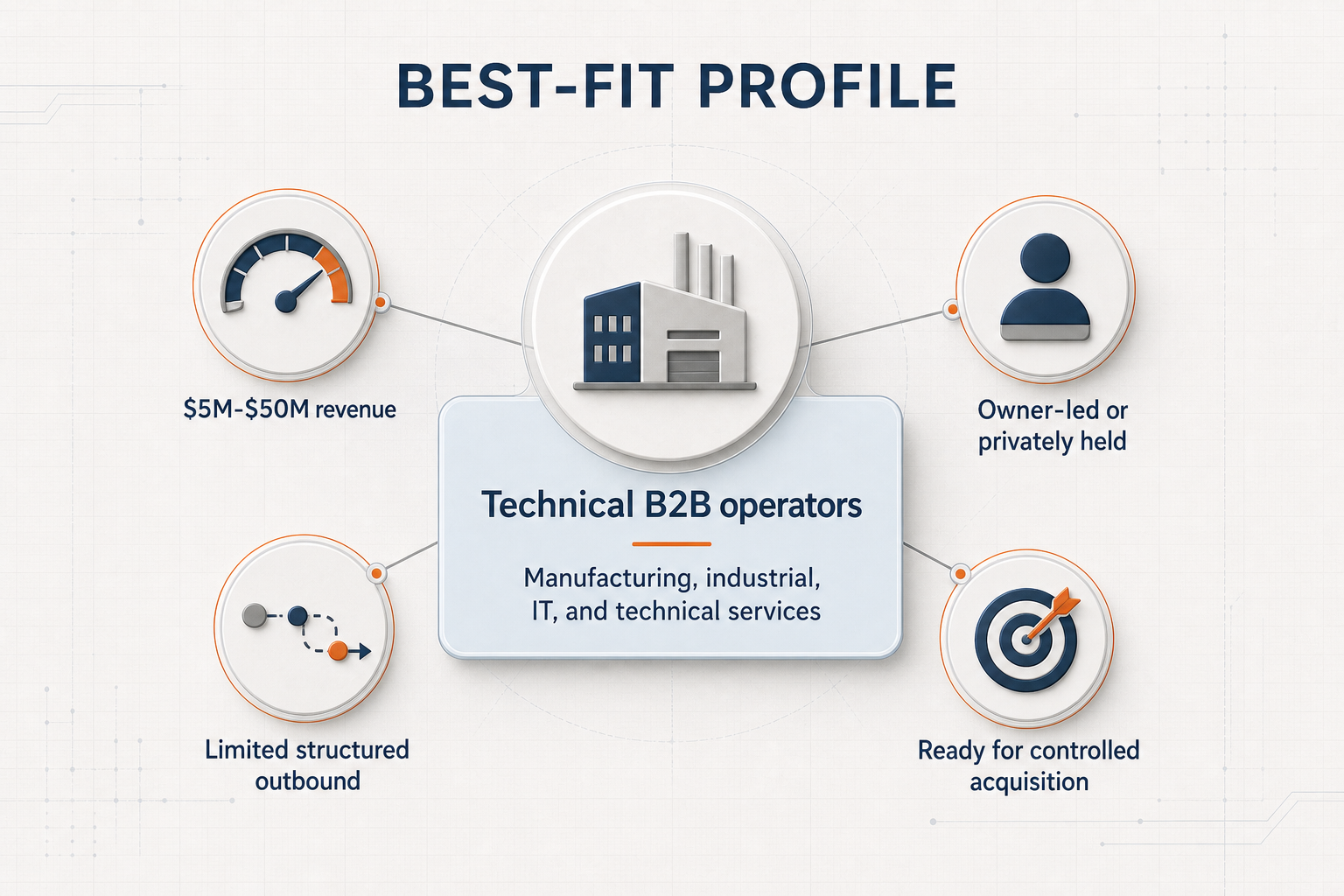
Write down the exact profile of the accounts you most want: industry, size, the trigger that makes them need you, and the work you do best. A lead either fits that profile or it does not, and putting it on paper takes the guesswork out of the call.
- 2
Confirm there is a real reason to act now
A good fit with no urgency is a future conversation, not a deal. Ask what changed that made them reach out and what happens if they do nothing. If there is no cost to waiting, treat it as a nurture, not a priority.
- 3
Check fit, authority, and budget early
Before you invest in a full proposal, confirm the prospect can actually decide, can fund the work, and matches the kind of buyer you serve best. Asking these questions early is not pushy. It respects everyone's time.
- 4
Route each lead by what it is
Send high-fit, ready buyers straight to a real conversation. Put good-fit, not-yet-ready leads into a light nurture. Let poor-fit leads go with a clear, kind no. One generic follow-up for all three wastes your best opportunities.
- 5
Track the outcome and tighten the filter
Review which qualified leads actually closed and which wasted time. Use what you learn to sharpen the best-fit profile every quarter, so qualification gets more accurate instead of staying static.
How qualification fits a larger system
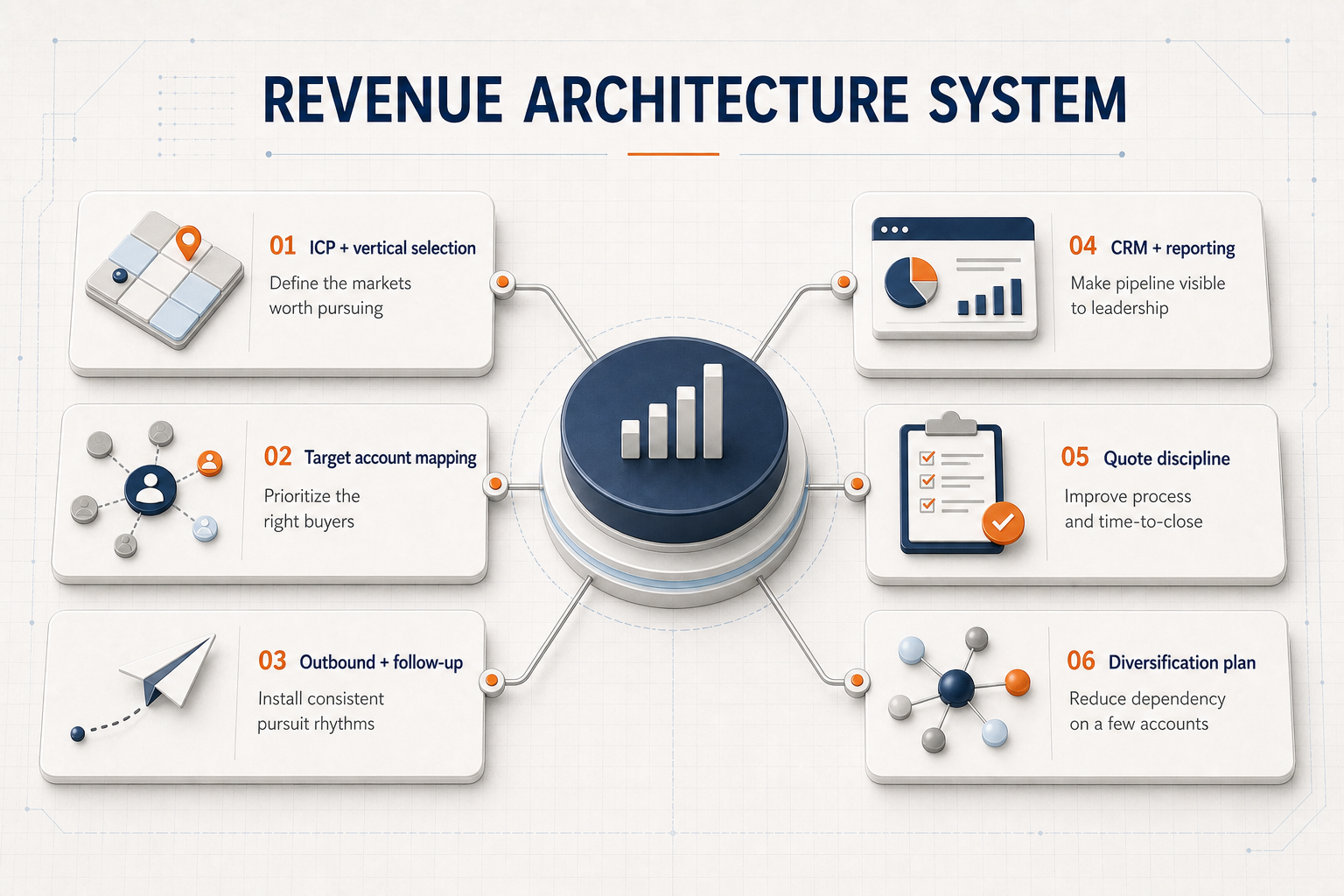
Qualification only works when the leads arriving are worth sorting in the first place. If your inbox is mostly poor-fit inquiries, the problem is upstream, in how you attract attention and where you show up. That is why we treat qualification as one part of a predictable sales pipeline rather than a standalone tactic. The same logic drives our lead generation system for service firms: attract the right buyers first, then qualify them, so your team is sorting good options instead of filtering noise. Both are field versions of the Revenue Architecture System we install for clients.
Where to start
You can begin without new software or new hires. Pull your last twenty deals, mark which were a genuine fit, and look for the pattern. That pattern is the first draft of your best-fit profile, and it will tell you more than any scoring tool. From there, the fastest move is a short, no-pitch audit of where your pipeline leaks before qualification even begins. You can also read more about how we work before you ever talk to us.